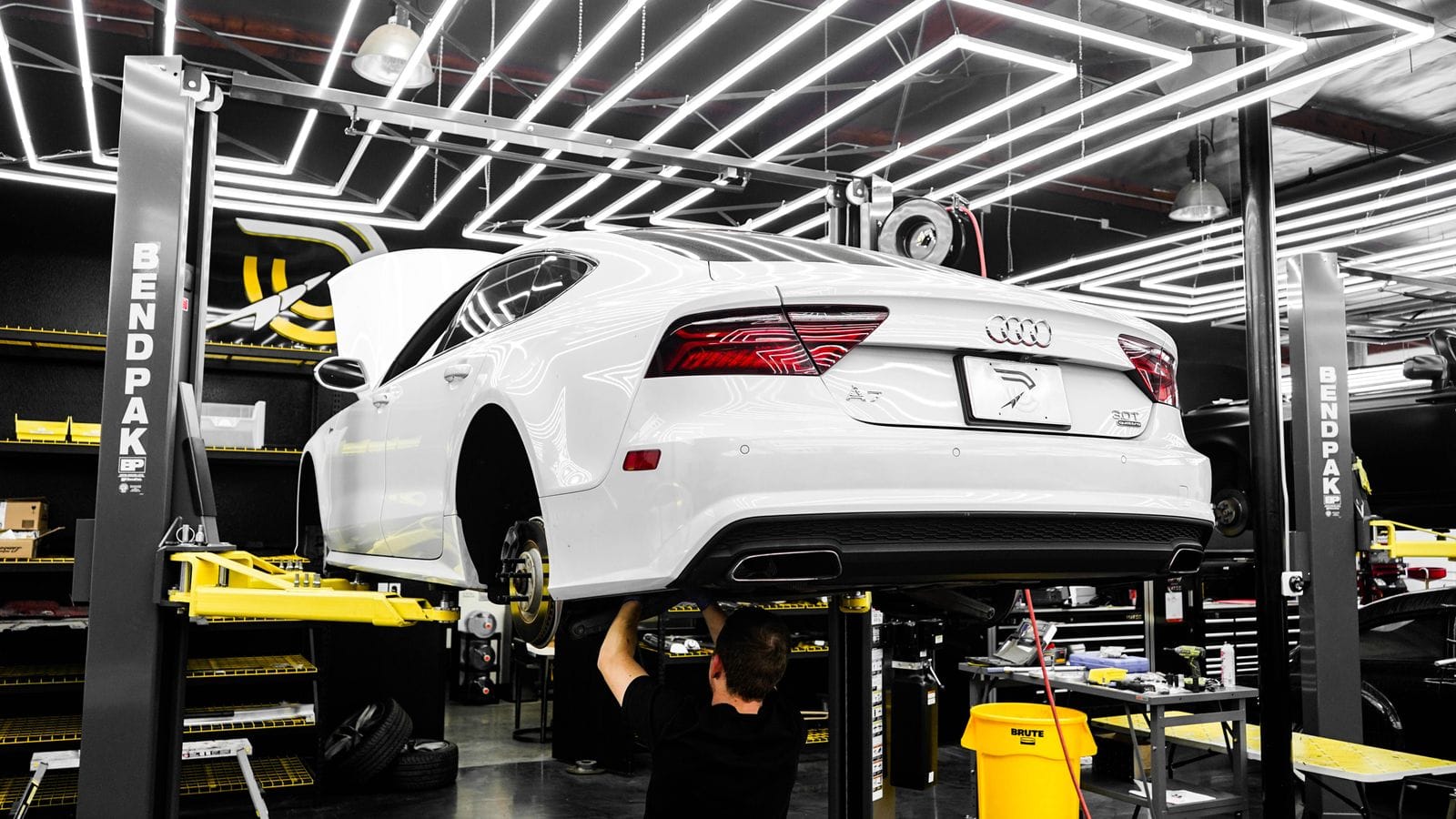
Oil Changes
European Oil Change
European-specification oil and filter, to the approval your car needs.
Price
From $190
Signs you need this
- The dash is asking for a service and the car is a VW, Audi, BMW, Mercedes, Porsche or Volvo
- A quick-lube shop turned you away, or used whatever was in the bulk tank
- The manual specifies an approval number rather than just a viscosity
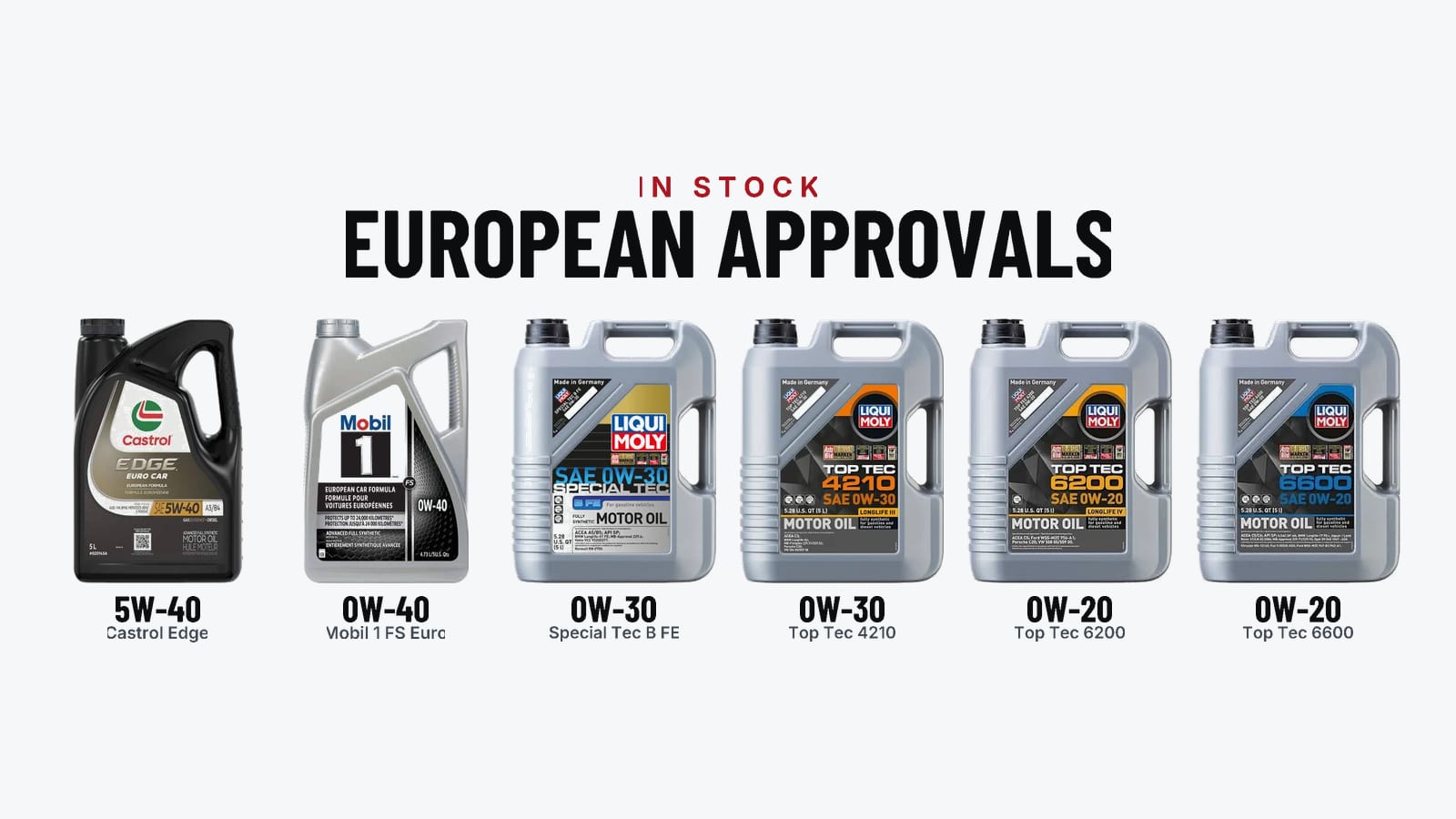
European manufacturers do not just specify a viscosity — they specify an approval, like VW 504 00 or MB 229.51, and the oil either carries it on the label or it does not. The approval covers how the oil behaves with a long service interval, a particulate filter, or a timing chain, and using an oil without it can shorten the life of parts that are expensive to put right.
That is why these are stocked as their own range rather than poured from a bulk tank. We match the approval printed in your manual, and the filter to go with it.
Common questions
How often does engine oil need to be changed?
Follow the interval in your owner's manual — it's the one figure written for your specific engine. As a rough guide, most vehicles on full synthetic go 8,000 to 12,000 km, and conventional oil is usually closer to 5,000 to 8,000 km. Short trips, stop-and-go traffic, towing, and Toronto winters all count as severe service and pull the interval shorter.
How long does an engine oil change take?
Between 45 minutes and an hour for most vehicles. Book ahead and that's your slot; if you're walking in it depends on what's already in the bays, so call first and we'll tell you honestly what the day looks like.
Can you use genuine manufacturer oil and filter?
Yes, on request. We don't keep genuine parts on the shelf, so they have to be special ordered — tell us when you book and allow time for them to come in. If you'd rather not wait, what we stock carries the approval your manufacturer specifies, which is the requirement the manual is actually setting.
Does an oil change include an inspection?
The oil change covers the oil, the filter, your tire pressures, and the maintenance reminder. A multi-point inspection is a separate service, and it's the one that catches a worn belt, a leaking seal, or brakes near their limit while they're still small problems. Ask for it when you book and we'll do it while the car is already on the hoist, which saves you a second visit.
Do I still need an oil change if I barely drive?
Yes. Oil degrades with time as well as distance — it absorbs moisture and fuel dilution that never burn off on short trips. If you don't reach the mileage figure, change it once a year.
What happens if engine oil isn't changed?
Old oil thickens, turns acidic, and loses the additives that keep contaminants in suspension. The residue bakes into sludge that blocks narrow oil passages, which starves the parts at the end of them — timing chain tensioners, turbochargers, and camshafts are usually first. At that point you're looking at engine repairs that cost many times what the oil changes would have.
Why does engine oil need to be changed?
Oil doesn't get used up, it wears out. Heat and combustion break the additive package down, and the filter eventually stops catching what's circulating. Changing the oil and filter together restores the protection the engine was designed around.
What is engine oil?
A blend of base oil and additives that does four jobs at once: it lubricates the moving parts, carries heat away from them, keeps combustion by-products in suspension so the filter can catch them, and protects metal from corrosion. Its grade — 5W-30, 0W-20, and so on — describes how it flows cold and hot.
Should I use full synthetic or conventional oil?
Use whatever your manufacturer specifies. Most vehicles built in the last decade require full synthetic, and putting conventional in one of those engines is a genuine way to cause damage. If you're not sure, tell us the year, make, and model and we'll look it up.
Do you use the oil my manufacturer specifies?
Yes — the exact viscosity and specification your vehicle calls for, not a one-size-fits-all bulk oil, with a quality filter to match. We set your tire pressures and reset the maintenance reminder before you leave.
Something else? Call (647) 436-5940 during shop hours and talk to an advisor.
More oil changes
Oil Changes
Full Synthetic Oil Change
Full synthetic oil and filter, changed to manufacturer specification.
Every 5,000–8,000 km, or every 6 months
Oil Changes
Conventional Oil Change
Conventional oil and filter, changed to manufacturer specification.
Every 5,000 km, or every 4 months
Ready when you are
Book online in under a minute, or call the shop and talk to an advisor directly.