Repairs
Suspension Repairs
Shocks, struts, control arms, tie rods, and ball joints replaced.
Price
Inspection $60
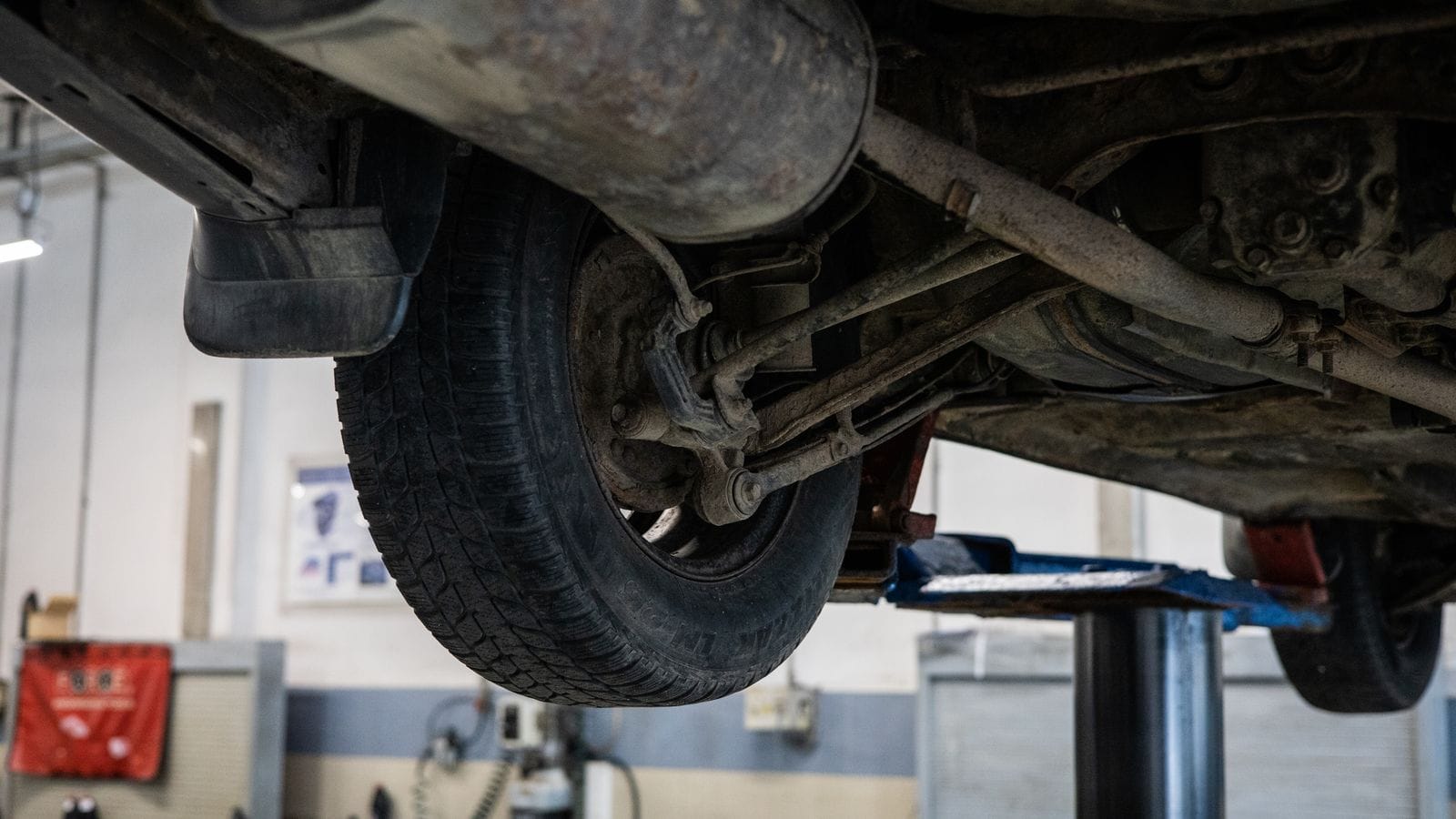
Signs you need this
- The car floats, bounces, or crashes over bumps
- Clunks or rattles over rough pavement
- Uneven or cupped tire wear
- Nose dives hard under braking
Worn suspension doesn't just ride badly — it changes how the car stops and holds a line, and it destroys tires. Toronto roads are hard on it.
We inspect the whole assembly rather than replacing the one obvious part, because a fresh strut bolted to a worn control arm won't feel new. Any suspension work is followed by an alignment.
Common questions
What are the signs of worn shocks or struts?
The car floats or wallows over bumps, dives hard when you brake, keeps bouncing after a dip, or the tires show cupped, scalloped wear. Worn dampers lengthen your stopping distance, which makes them a safety item rather than a comfort one.
What causes a clunk over bumps?
Most often sway bar links, worn bushings, or a failing strut mount. Ball joints and tie rod ends make themselves known the same way, and those are the ones you don't want to leave — we'll put it on the hoist and find which it is.
Do I need an alignment after suspension work?
Yes, and it's included. Replacing control arms, struts, tie rods, or ball joints changes the geometry, so the car has to be realigned afterwards or you'll wear out a set of tires proving it.
How long do shocks and struts last?
Commonly 80,000 to 150,000 km, though our roads are hard on them. They degrade gradually, so most people don't notice how far gone they were until the new ones are in.
Something else? Call (647) 436-5940 during shop hours and talk to an advisor.
More repairs
Repairs
Brake Repairs
Pads, rotors, calipers, and brake lines measured and replaced.
Repairs
Exhaust Repairs
Mufflers, pipes, flex joints, and converters welded or replaced.
Repairs
General Repairs
Belts, pumps, bearings, axles, and cooling system work.
Ready when you are
Book online in under a minute, or call the shop and talk to an advisor directly.