- Vehicle
- 2013 Volkswagen Golf 2.5L
- Mileage
- 60,000 km
- In the shop
- September 29, 2026
What the customer noticed
At 60,000 km it's easy to assume a car is barely broken in. But this Golf is 13 years old, and rubber, brake parts and filters age with time as well as with distance. A car that's driven little and sits a lot can be harder on its parts than one that's driven every day.
What we found
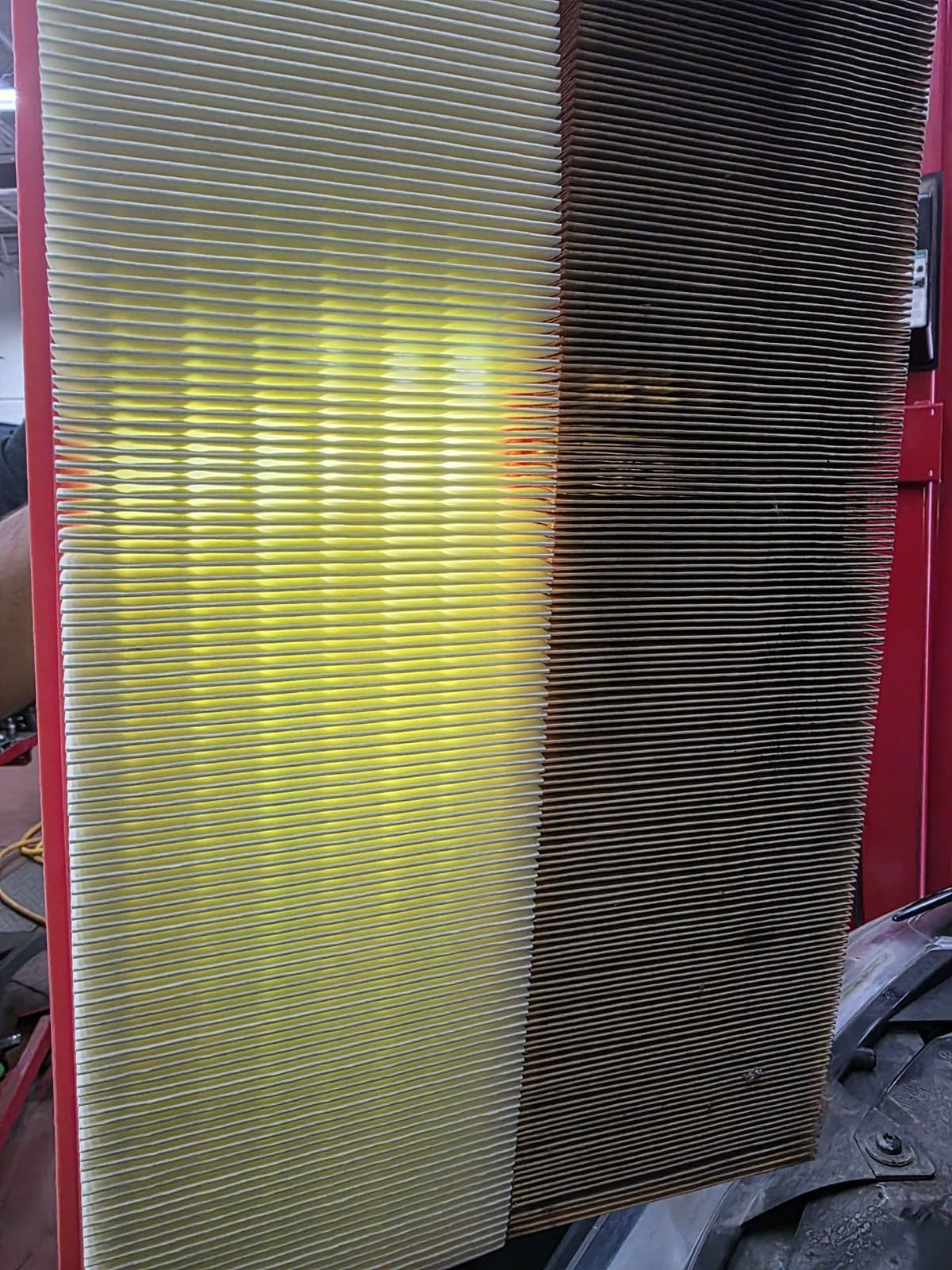
Engine air filter: badly clogged (photo 1, new filter on the left). The engine breathes through this filter, and one this loaded restricts airflow, costs power and response, and makes the engine work harder for the same result.
Cabin air filter: it looked like the original. Everything you breathe inside the car passes through it. An old one cuts heater and A/C airflow, makes it harder to clear fogged windows in winter, and stops trapping dust and pollen.
Brake rotors, front and rear: heavy rust (photo 3). Low-mileage cars that sit get this. Rust builds up on the braking surface and around the edges, the pads only clean part of the face, and the car brakes on less metal than it should. It shows up as noise, pulsing and longer stops.
Left rear brake caliper: brake fluid leaking past the piston seal (photo 4). This is a safety problem. The system slowly loses fluid, the fluid soaks the pad and ruins its grip, and that wheel stops braking properly. Left alone, it keeps getting worse.
Transmission pan: seeping at the gasket (photo 2). It isn't urgent yet, but running low on transmission fluid leads to harsh shifting and overheating, and a transmission costs far more to fix than a gasket.
Tires: dry-rotted, with cracking down the centre of the tread (photo 5). The tread depth was fine because the car hasn't covered many kilometres, but the rubber has aged out. Old rubber hardens and grips poorly, especially in the wet, and the cracks can keep spreading until the tread separates.
What we did
- Replaced front and rear brake pads and rotors
- Replaced the leaking left rear brake caliper
- Flushed and replaced the brake fluid
- Replaced the engine air filter
- Replaced the cabin air filter
What's next
- Reseal the transmission pan when the winter tires go on
- Replace the all-season tires in the spring, before they go back on the car
The result
The brakes were the priority, so they're sorted now: new pads, rotors, the rear caliper, and fresh fluid, since fluid this age has absorbed moisture. The car stops straight and quietly again. The pan reseal is booked in with the winter tire changeover, so it doesn't mean a separate trip, and the dry-rotted all-seasons come off for winter anyway.
A car needs more than oil changes: brakes, filters, tires and fluids all wear and age too. A multi-point inspection is its own service and isn't included with every oil change. It checks the fluids, brakes, tires, belts and suspension, and gives you a list of what's fine, what to keep an eye on and what needs doing now, so you can plan the work instead of finding out on the side of the road.
Photos
 1
1Engine air filter: new on the left, the one we took out on the right. 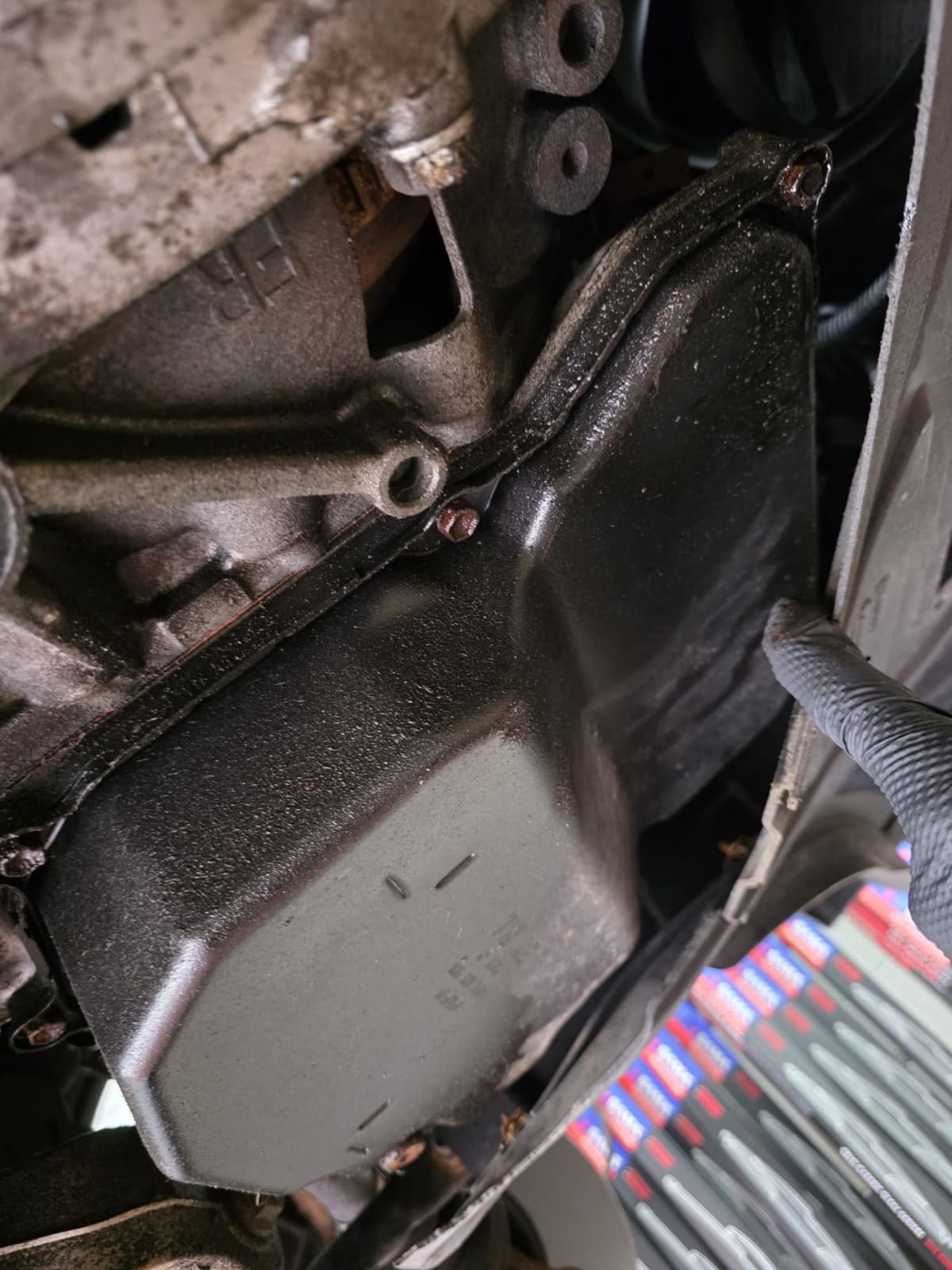 2
2Transmission pan wet along the gasket. Resealing at the tire changeover. 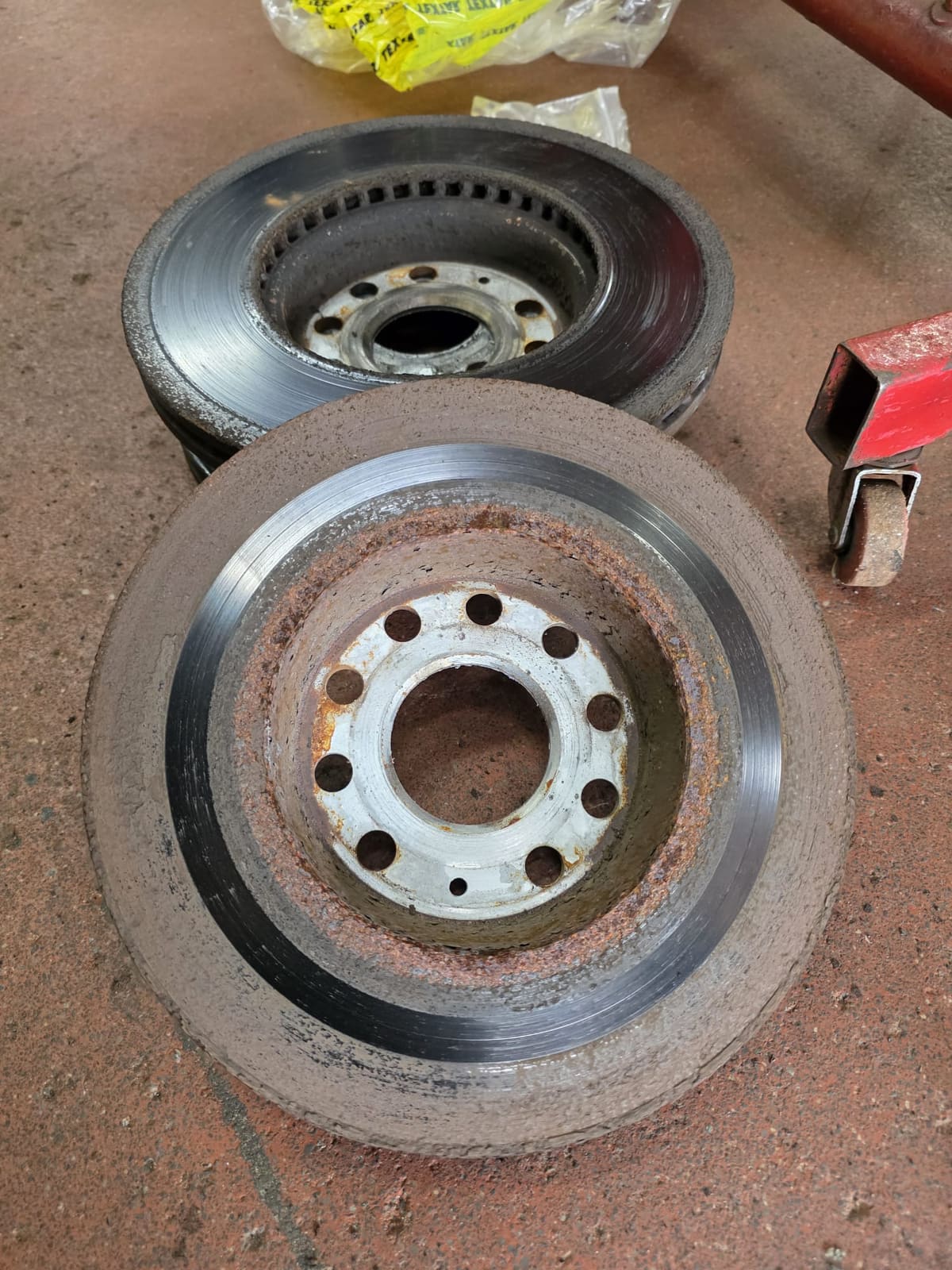 3
3The old rotors: rust eating into the braking surface. 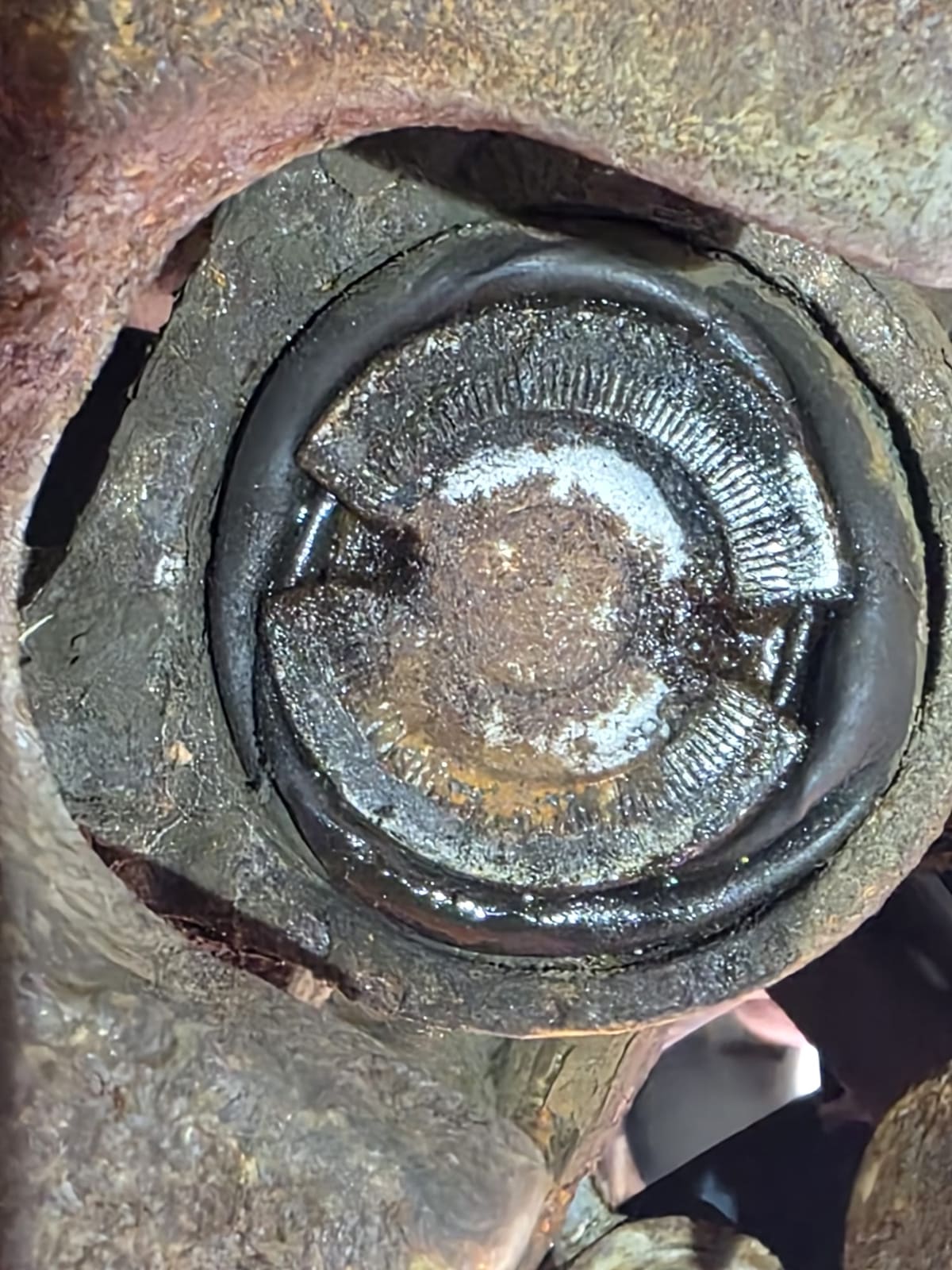 4
4Left rear caliper leaking brake fluid past the piston. 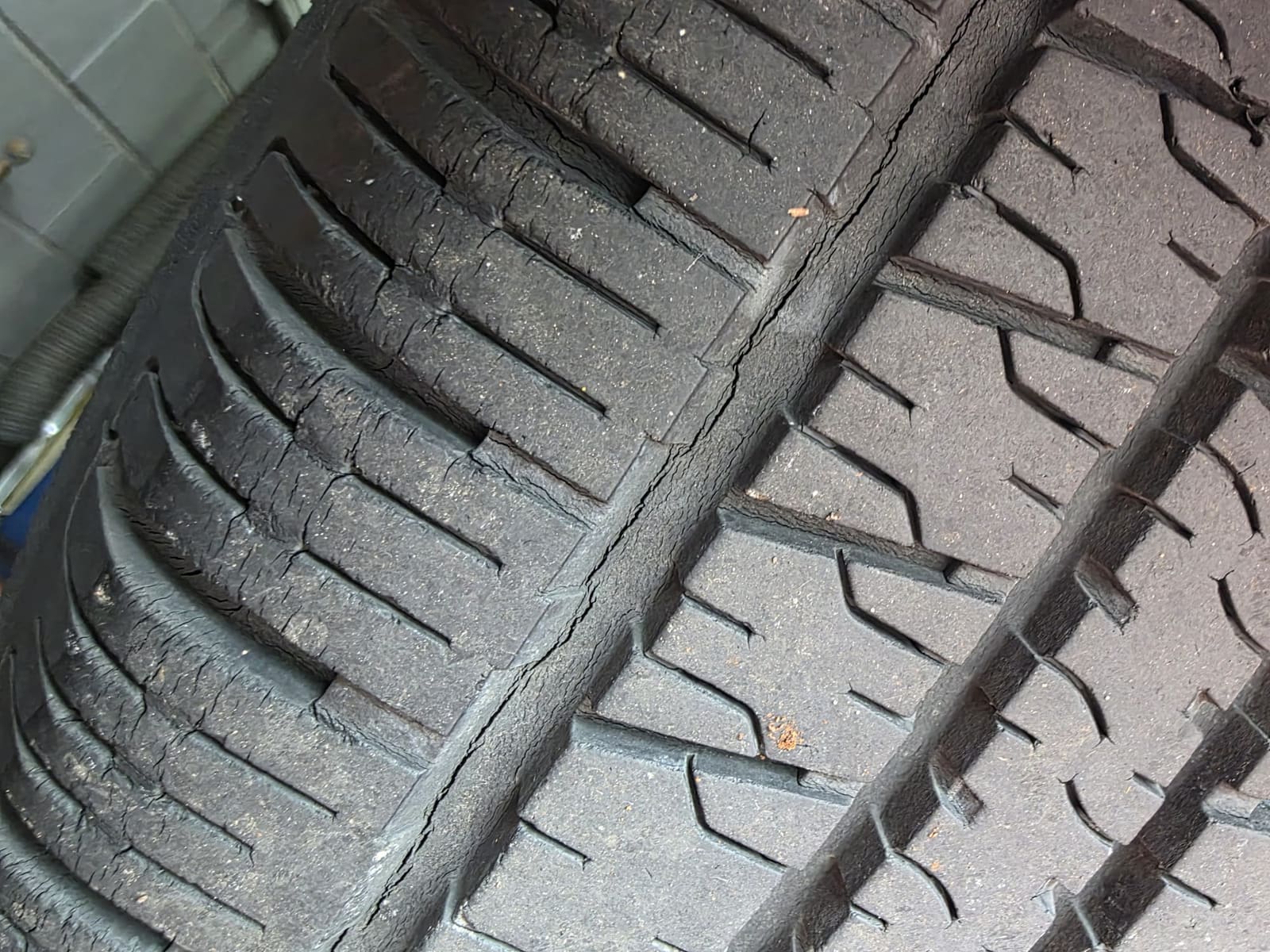 5
5Dry rot: plenty of tread left, but the rubber is cracking.
Work performed by the team at Level Auto, Scarborough