Maintenance
Rubberized Undercoating
Rubberized coating sprayed on the underbody and frame.
Price
From $350
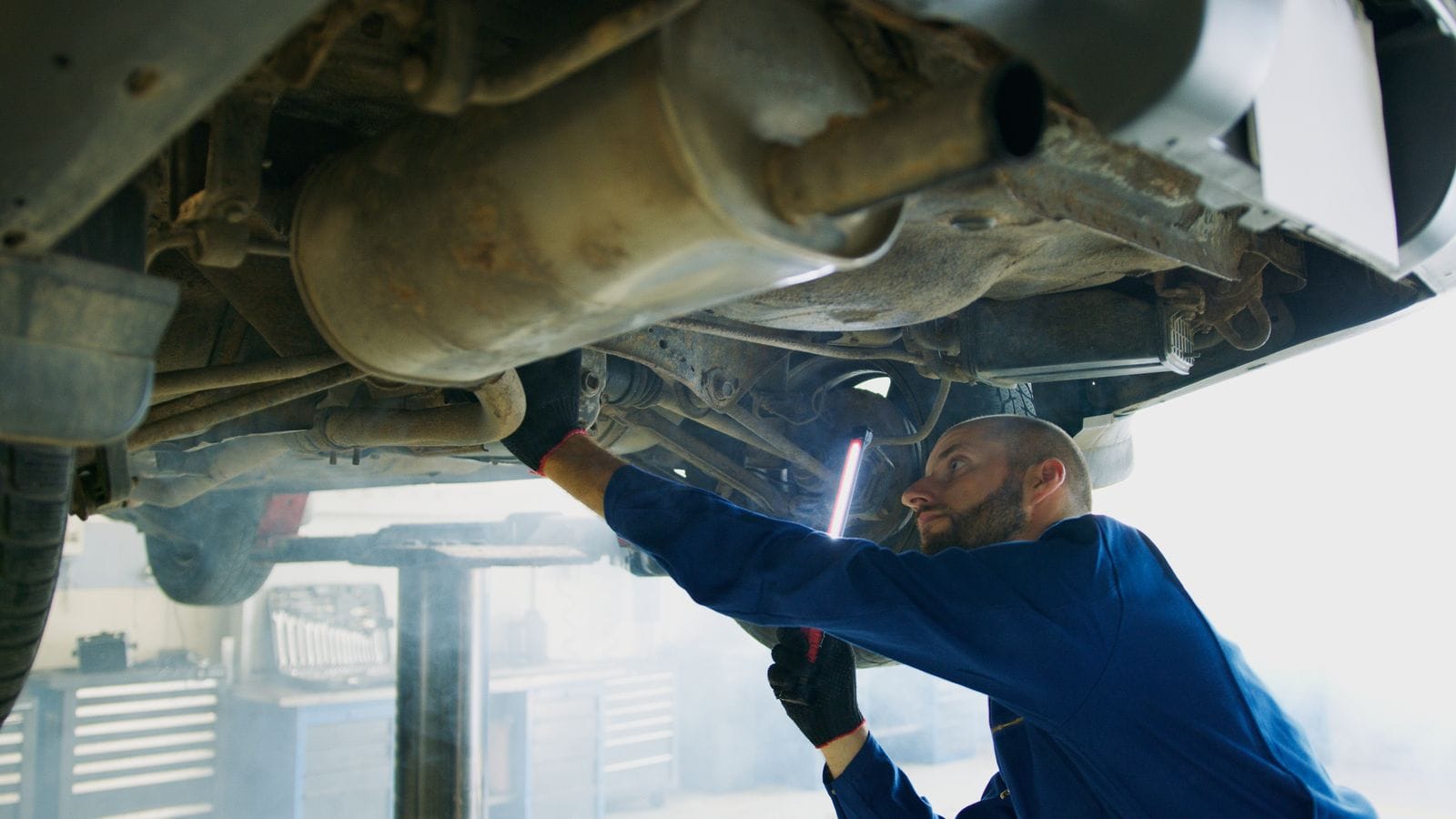
Salt is the single biggest threat to a vehicle's lifespan in this province. It works from underneath, and by the time rust shows on the body it has usually been eating the frame and brake lines for years.
Rubberized undercoating lays down a thick, durable barrier across the underbody, sealing the metal off from salt, moisture, and stone chips. It also cuts a noticeable amount of road noise from the cabin.
It works best on newer vehicles with no rust, or very little, on the underbody. Please have the underside of your vehicle cleaned before your appointment — we apply the coating, but we don't clean or prepare the underbody.
Price depends on the size of the vehicle, since a truck has considerably more underside to cover than a sedan.
Common questions
How often should undercoating be applied?
We recommend a touch-up every 2 to 3 years, or sooner where stone chips and road debris have worn it through. Ontario's road salt finds any gap you leave it.
When is the best time to undercoat?
Late summer or early fall, before the salt goes down. The underbody needs to be clean and dry for the coating to bond properly, so have it cleaned before your appointment — much easier before winter than during it.
Is it worth undercoating an older vehicle?
It depends on what's already there. Undercoating works best on newer vehicles with no rust or very little, and coating over existing rust just hides it — we'll put it on the hoist and give you an honest answer before you spend the money.
Does undercoating do anything besides prevent rust?
It noticeably reduces road and tire noise inside the cabin, since the coating damps vibration in the floor pans and wheel wells. That's a side benefit, not the reason to do it.
Something else? Call (647) 436-5940 during shop hours and talk to an advisor.
From the blog
More on rubberized undercoating
More maintenance
Maintenance
Engine & Cabin Air Filters
Engine and cabin air filters inspected and replaced.
Engine every 20,000–30,000 km · cabin yearly
Maintenance
Wiper Blades
Front and rear wiper blades replaced at the correct length.
Yearly, or after a hard winter
Maintenance
Battery Replacement
Battery and charging system tested, battery replaced and recycled.
Tested yearly · replaced every 3–5 years
Ready when you are
Book online in under a minute, or call the shop and talk to an advisor directly.